
Solitaire Basics
The 4Cs, Decoded
How to read a diamond certificate
6 min read
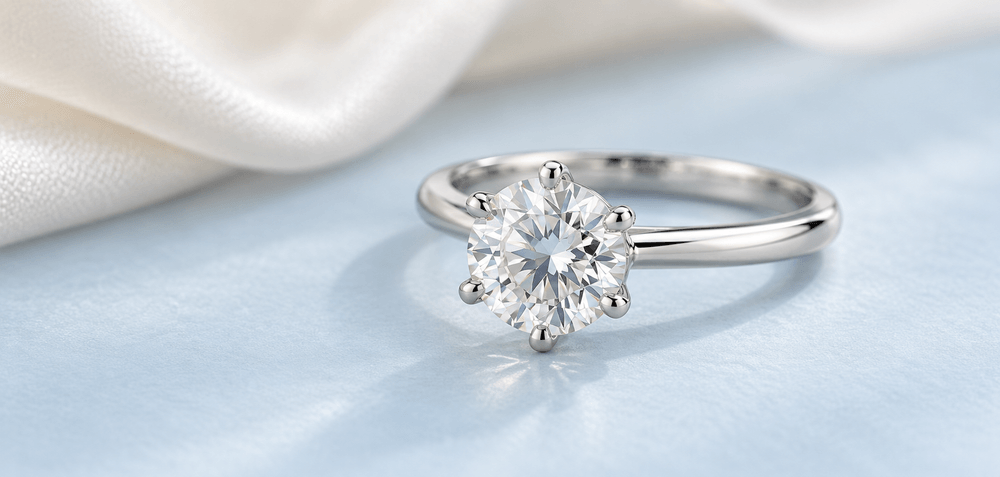
Understand your diamond
Four characteristics — cut, colour, clarity and carat — describe every polished diamond. A grading report records all four, so knowing what they mean makes any two stones easy to compare.
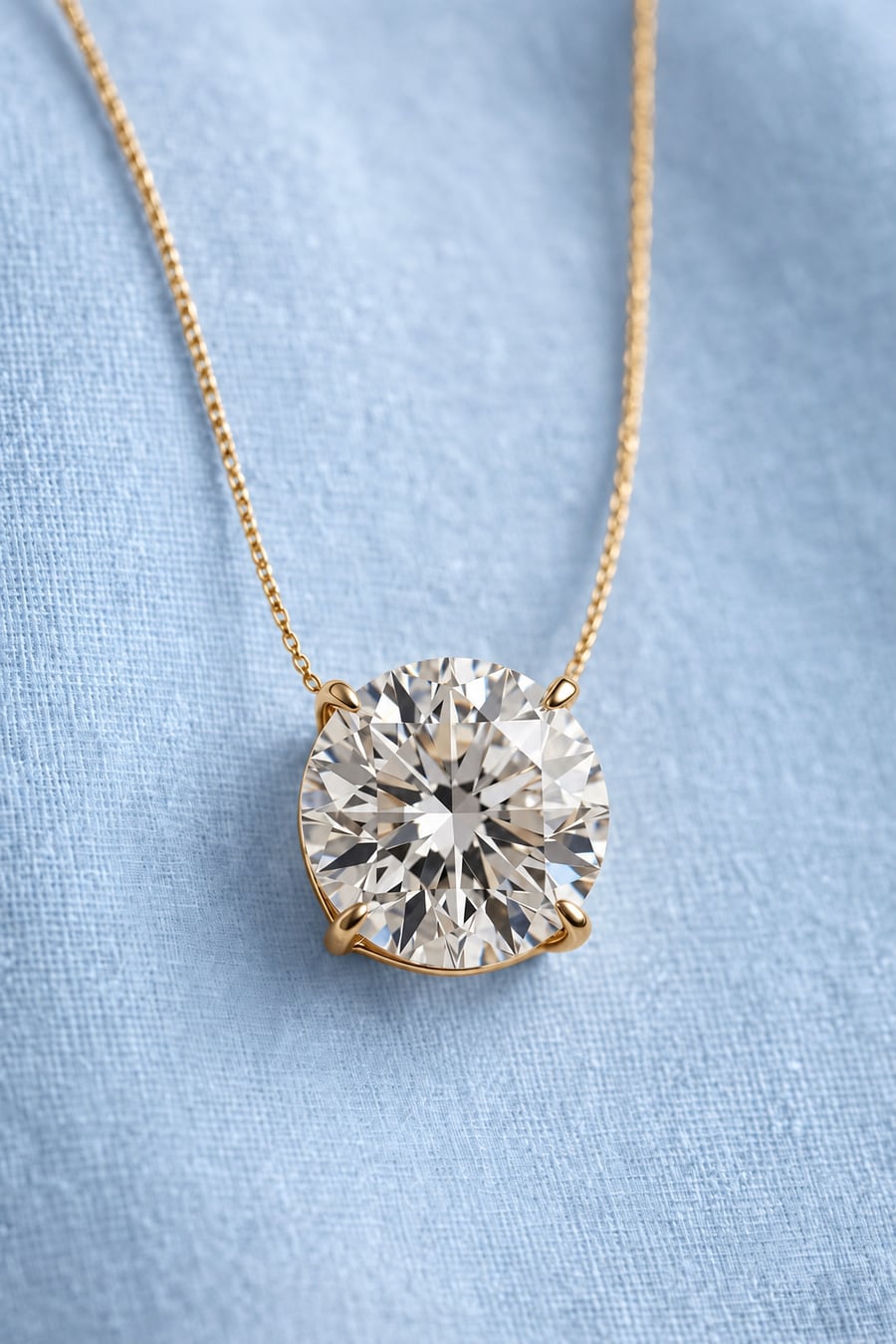
01 / Cut
Proportions and finish influence how a diamond interacts with light.
Cut is the only one of the 4Cs decided entirely by the cutter. It describes how well the facets are angled and proportioned, and how carefully the stone is polished — not its outline, which is called its shape (round, oval, emerald and so on).
A well-cut diamond returns light up through the top of the stone as brightness, splits it into flashes of colour (fire) and shows lively sparkle as it moves (scintillation). A stone cut too deep or too shallow lets light escape through the sides or bottom and can look darker or glassy, whatever its other grades.
For round brilliants, laboratories give an overall cut grade, typically from Excellent (or Ideal) down to Poor. Reports also list polish and symmetry, which describe finishing quality.
TipIf you are choosing where to spend your budget, cut has the biggest effect on how bright a diamond looks on the hand.
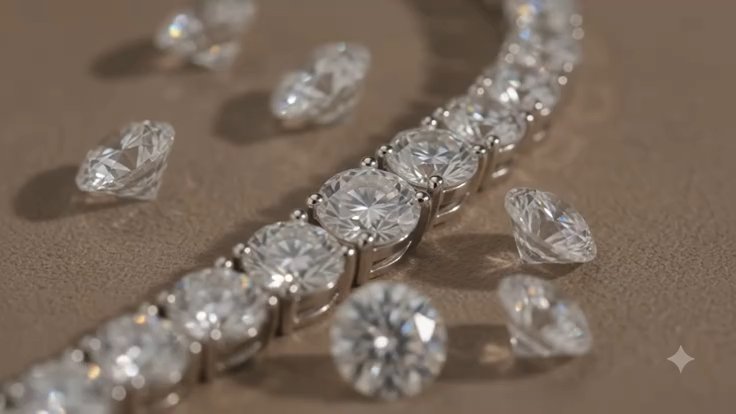
02 / Colour
Colour grading describes subtle differences in the stone.
For white diamonds, colour grading measures how little body colour a stone has. The widely used scale runs from D (colourless) to Z (light yellow or brown), with each letter a very small step from the next.
Graders compare stones face-down against master stones under controlled lighting, because the differences are hard to see face-up. D–F are described as colourless, G–J as near-colourless, and the grades below that show warmth that is easier to notice.
- D – F
- Colourless; the differences between them are visible mainly to a trained grader.
- G – J
- Near-colourless; usually looks white once set, especially in white gold.
- K and below
- Faint warmth that can suit yellow and rose gold settings.
TipMetal colour changes how colour reads: a near-colourless stone can look whiter in white gold and warmer in yellow gold.
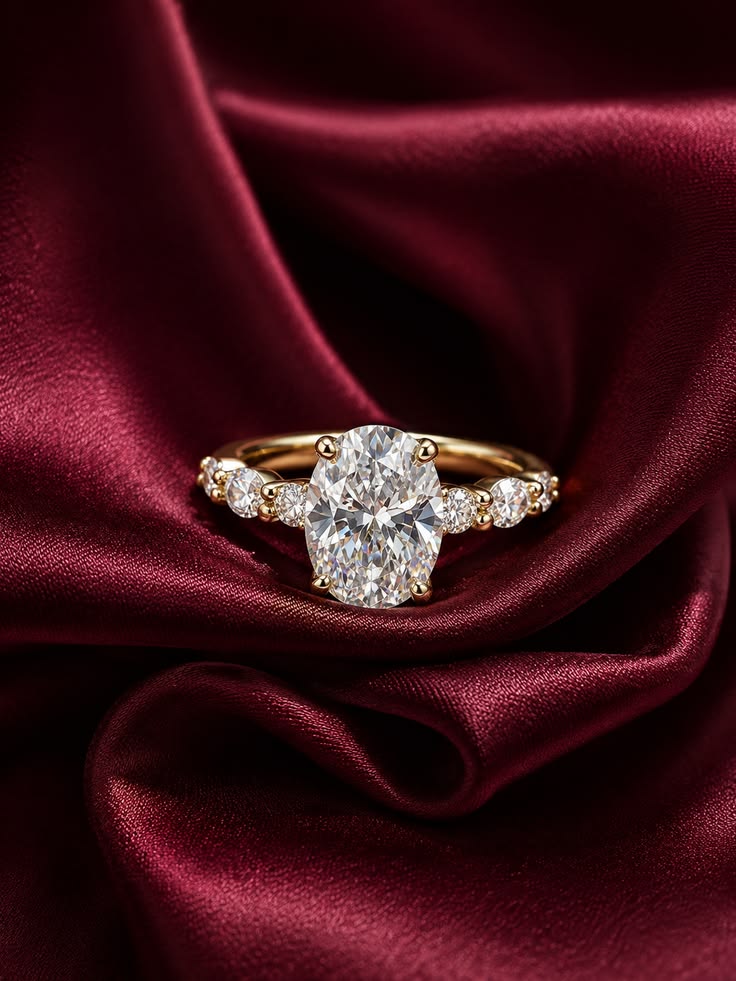
03 / Clarity
A closer look at internal and surface characteristics.
Most diamonds contain tiny internal features (inclusions) or surface marks (blemishes). Clarity grades how many there are, how large, where they sit and how visible they are under 10× magnification.
Many features that decide a grade cannot be seen without magnification, so a stone does not need a top clarity grade to look clean to the eye. A report's plotting diagram shows where the main inclusions are.
- FL / IF
- Flawless / Internally Flawless — no inclusions seen at 10×.
- VVS1 – VVS2
- Very, very slightly included — extremely difficult to see at 10×.
- VS1 – VS2
- Very slightly included — minor features, difficult to see at 10×.
- SI1 – SI2
- Slightly included — noticeable at 10×, sometimes visible to the eye.
- I1 – I3
- Included — features that are usually visible and may affect brightness.
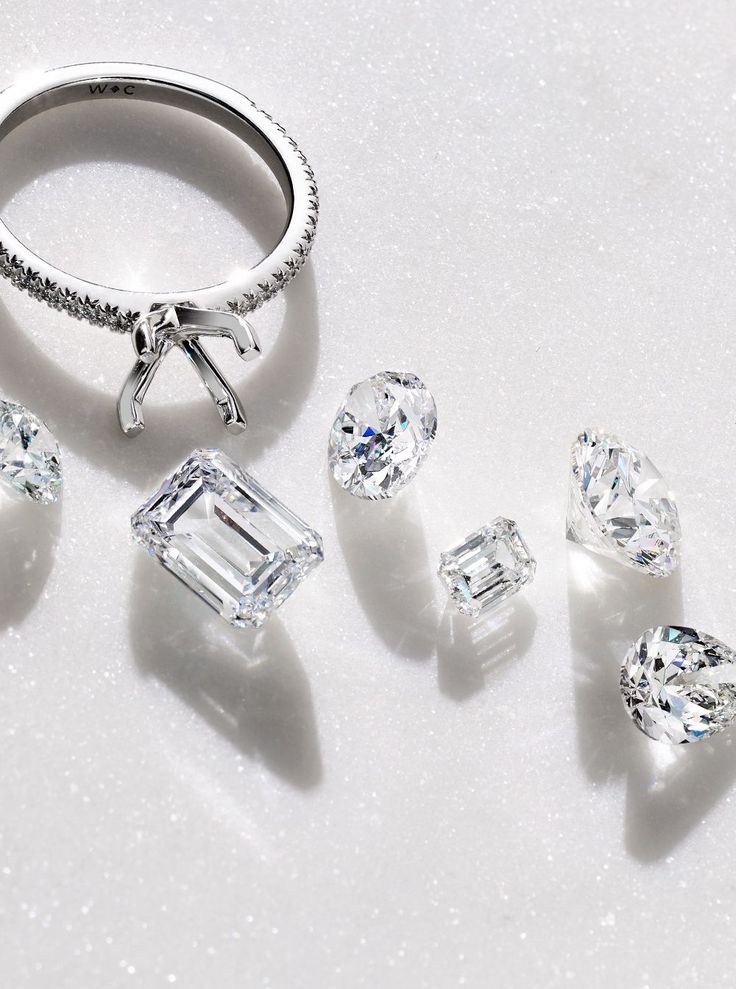
04 / Carat
Carat measures weight, while proportions also affect appearance.
Carat is a unit of weight, not size: one carat equals 0.2 grams and is divided into 100 points, so a 0.50 ct diamond may also be called a fifty-pointer.
Two diamonds of the same weight can look different in size. A stone cut with a deep pavilion carries weight below the setting, while a well-proportioned stone spreads it across a wider face-up diameter. That is why the millimetre measurements on a report are worth checking alongside the carat weight.
Price usually rises with weight, and jumps at popular points such as 0.50 ct and 1.00 ct, so a stone just below those marks can look almost the same for less.
05 / Reading the certificate
The grading report ties all four grades to one specific stone.
A grading report (often called a certificate) is issued by an independent gemmological laboratory such as IGI or GIA. It identifies one particular diamond and records how it was graded, so you can compare stones on the same terms.
- Report number
- A unique number you can look up on the laboratory's own website to confirm the report is genuine.
- Shape and measurements
- The outline and the stone's dimensions in millimetres.
- Grading results
- Carat weight, colour grade, clarity grade and, for round brilliants, cut grade.
- Finish
- Polish and symmetry grades, plus fluorescence.
- Diagrams
- A proportions diagram and a plot of the main clarity characteristics.
- Origin and inscription
- Whether the diamond is natural or laboratory-grown, and any laser inscription on the girdle that matches the report number.
TipAsk to see the report before you buy, and check that the report number matches any inscription on the stone.
A little knowledge. A more confident choice.
Explore Solitaire Rings